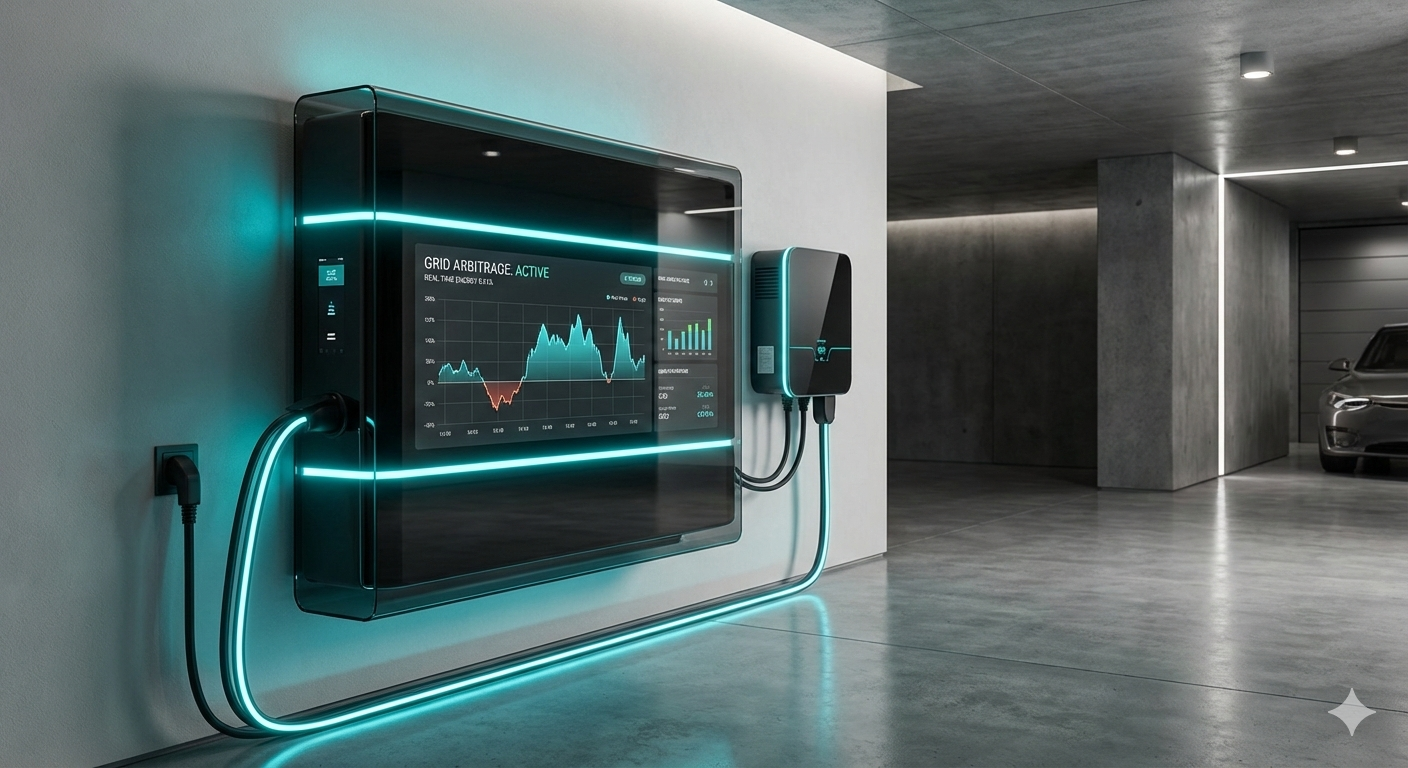
Most people buy home batteries for “backup power” when the lights go out. They are thinking too small.
In the Solar Supercycle, a battery isn’t just a backup generator; it is an active trading machine. By combining a smart battery with a “Time-of-Use” (TOU) utility plan, you can turn your home into a micro-power plant.
What is Energy Arbitrage?
Utilities charge different rates at different times.
- 2:00 PM: Electricity is cheap (or free if you have solar).
- 6:00 PM: Electricity is expensive (everyone comes home and turns on the AC).
** The Strategy:** Your battery charges up when power is cheap (or free from your roof). Then, when the price spikes at 6:00 PM, your battery dumps that energy back into your home (or the grid), saving you from paying peak rates.
The Hardware You Need
Not all batteries can do this. You need “Smart” batteries with AI-driven software that predicts weather and pricing.
Top Contenders for 2026
- Tesla Powerwall 3: The standard for ease of use. Integrated inverter makes it cheaper to install.
- Enphase IQ 5P: Best for granular control and existing Enphase systems.
- Server Rack Batteries (DIY): For the tech-savvy, building a LiFePO4 server rack is 50% cheaper than pre-built units.
Wealth Tip: The 30% Federal Tax Credit applies to these batteries even if you don’t have solar panels, as long as they hold at least 3kWh of capacity.
The Math
A typical home saves an extra $800 - $1,200 per year using arbitrage software versus just standard solar usage. Over the 15-year life of the battery, that is pure profit.
Check Battery Pricing & Rebates in Your State »Conclusion
Don’t just store energy. Trade it. The grid is changing, and the volatility is where the money is made.